Well Water Filtration Options That Work in Loxahatchee
October 16, 2025
October 16, 2025
Buying in Loxahatchee or The Acreage and wondering if the well water is safe to drink? You’re not alone. Many homes here rely on private wells, and water quality can vary from lot to lot. In this guide, you’ll learn what to test, which filtration systems actually work in our area, how much they cost, and where to find local help. Let’s dive in.
Shallow, permeable aquifers in southeast Florida make groundwater more vulnerable to surface impacts. That means your well can be affected by things like septic systems, fertilizers, and runoff. The U.S. Geological Survey explains this regional vulnerability in the Biscayne and surficial aquifers near Palm Beach County. See the USGS overview of groundwater quality.
Local land use adds to the risk. Loxahatchee and The Acreage have large lots, private septic systems, and nearby agricultural or turf areas. The county’s health department reviews well and septic plans and highlights these concerns. Review Palm Beach County’s onsite sewage guidance.
The Florida Department of Health recommends a regular testing schedule for private wells. Use a state‑certified lab and retest after any repairs or flooding.
Start with the state’s guidance for private-well owners and work with certified labs. Check Florida Department of Health testing recommendations. For local support, the Palm Beach County health department offers sampling guidance and bacterial testing through its Environmental Laboratory. See the county’s update on testing services.
Always choose treatment based on a current lab report. Here are the issues most often relevant to Loxahatchee and what works.
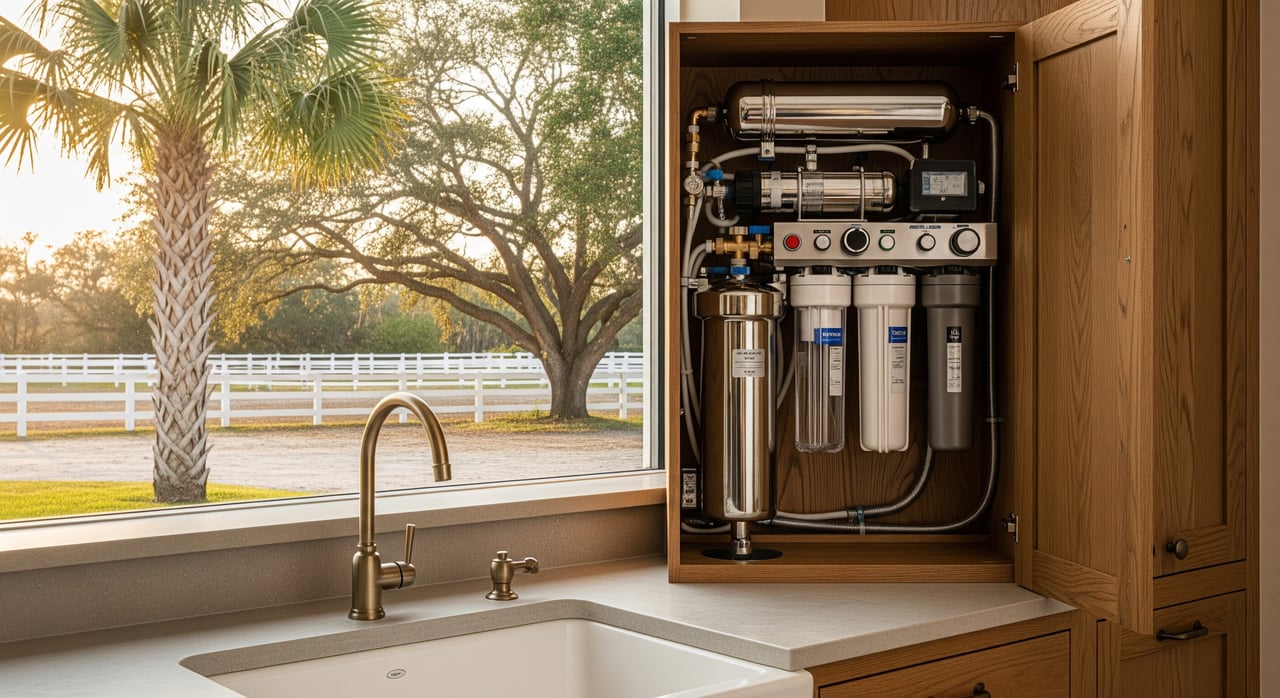
If a test is positive for coliform or E. coli, stop drinking the water unboiled and contact the county health department. Corrective steps often include shock chlorination and fixing well seals or septic issues. For ongoing protection, point‑of‑entry UV disinfection or a continuous chlorination system can control microbes when sized and maintained properly. Review EPA summaries of treatment technologies.
Nitrate is a priority, especially for infants. Boiling does not remove it. Point‑of‑use reverse osmosis at the kitchen sink is a cost‑effective fix for drinking and cooking water. Whole‑house anion‑exchange systems are an option when you need larger volumes. See EPA guidance on treatment options.
Staining, metallic taste, or slime buildup often point to iron, manganese, or hardness. Water softeners handle hardness and can reduce dissolved iron at moderate levels. For higher iron or manganese, use oxidation plus filtration (such as greensand or catalytic media). If iron bacteria are present, you may need disinfection along with filtration. Learn more about iron and manganese in private wells. Local water is often moderately hard to very hard, so plan for softening as part of your system design. UF/IFAS explains hard water basics.
Regional studies have detected herbicides and, in some areas, arsenic linked to historic turf and agricultural uses. If you’re near golf courses or former agricultural land, add these tests. For many pesticides and VOCs, granular activated carbon or RO can be effective. Arsenic treatment depends on its form and may require RO, specialized adsorptive media, or anion exchange. See the USGS report on South Florida contaminants and an overview of arsenic treatment approaches. Review treatment considerations for arsenic.
If you notice fuel odors or are near a tank or industrial site, test for VOCs. GAC or RO systems can reduce many VOCs when designed for the specific compounds in your lab report. See EPA technology summaries.
PFAS can be reduced with RO or specific GAC or anion‑exchange media. Test first, then select a unit with appropriate certifications. Review PFAS treatment options for private wells.
Choosing where to treat your water depends on the problem and budget.
Your final cost depends on water chemistry, flow needs, and pretreatment. Plan for routine filter changes and annual testing.
Follow a simple, low‑stress process to protect your water and your investment.
If you’re under contract on a Loxahatchee property with a private well, build in enough time for a certified water test and results. Ask for any past lab reports and maintenance records for the well, softener, RO, or UV systems. If results show bacteria or high nitrate, plan for corrective steps and a retest to confirm performance before closing.
If you’re listing a home, a recent clean test and clear records of equipment service can boost buyer confidence. When issues appear, addressing them early and documenting fixes can help keep your timeline on track.
Ready to talk about homes with wells in Loxahatchee or The Acreage and how to handle water due diligence? Reach out to Craig Reeves for clear guidance and local market expertise.
Stay up to date on the latest real estate trends.


Get assistance in determining current property value, crafting a competitive offer, writing and negotiating a contract, and much more. Contact us today.