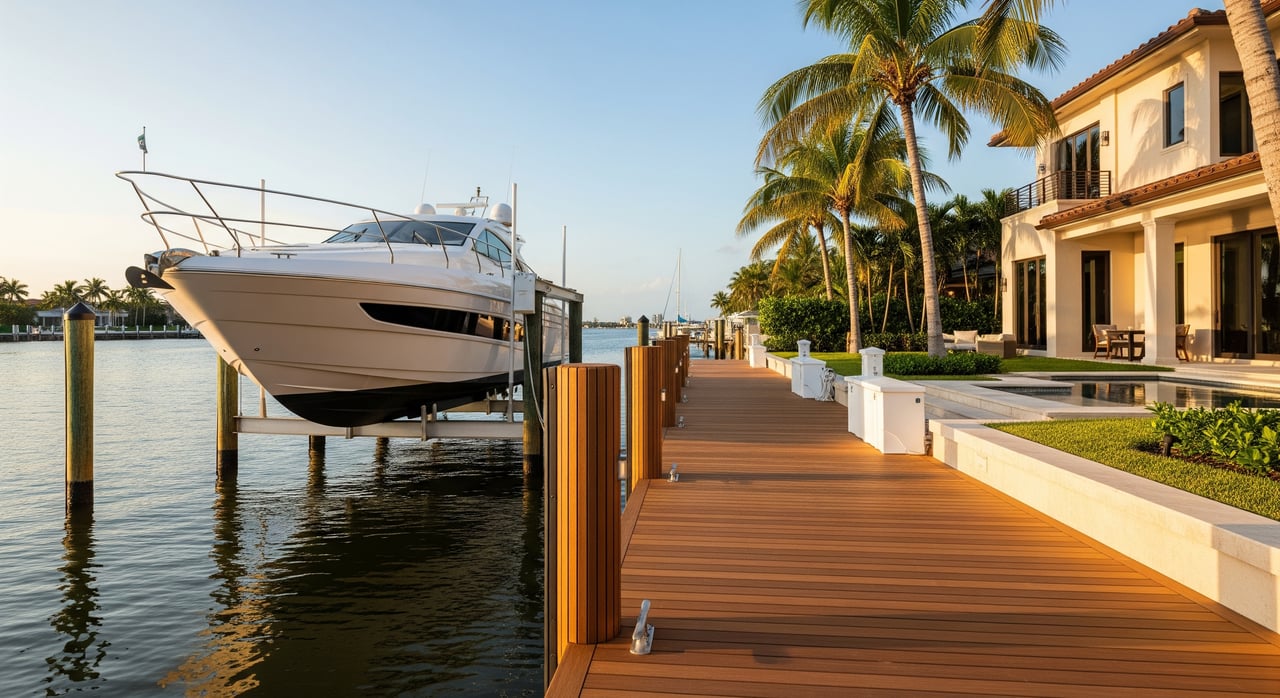
Boat Docks 101: What North Palm Beach Buyers Should Know
November 27, 2025
November 27, 2025
Dreaming of stepping from your backyard onto your boat and cruising the Intracoastal at sunrise? In North Palm Beach, that lifestyle is within reach, but a private dock adds layers of permits, design choices, costs, and insurance details that can affect your purchase. You want smooth access to open water and peace of mind that your dock is safe, legal, and built to last. This guide walks you through the essentials so you can buy with confidence and plan ahead. Let’s dive in.
North Palm Beach sits along the Intracoastal Waterway and Lake Worth Lagoon, with relatively direct access to the Atlantic through nearby inlets. That is great news if you value quick runs offshore or easy day trips by powerboat. Before you buy, confirm whether the property fronts the ICW, a canal, or a bayou, since water depth and turning room vary and can limit vessel size.
Bridge height can be a deal-breaker for tall masts and towers. Identify nearby bridges, note whether they are fixed or opening, and match their vertical clearances to your vessel. Map local channel markers, typical no-wake areas, and any limits on overnight mooring to understand how your run times and routes might change.
Even with a private dock, you may rely on local marinas for fuel, pump-outs, haul-outs, and larger maintenance projects. If your property’s water depth is marginal or your vessel is larger than average, having alternative berthing options nearby adds flexibility. Ask about waitlists and seasonal demand so you are not stuck when you need service.
For authoritative guidance, reach out to Palm Beach County Building, Planning and Zoning, and Environmental or Marine resources staff. The Florida Fish and Wildlife Conservation Commission can clarify boating and manatee rules. For macro data like tides and depths, consult NOAA charts, and for federal navigation and permitting questions, contact the U.S. Army Corps of Engineers.
Most docks in North Palm Beach require approvals from more than one authority. Expect local building permits and zoning setbacks, possible state oversight for work on sovereign submerged lands, and federal review from the U.S. Army Corps of Engineers for structures in navigable waters. Approvals from one agency do not replace others, so plan your timeline accordingly.
Seagrass beds, mangroves, and protected habitats can shape your design and timing. Projects that would disturb sensitive areas may face seasonal work limits, specialized construction methods, or mitigation requirements. New or maintenance dredging, if needed, has its own review and can add both time and cost.
Many neighborhoods have rules about dock length, materials, lighting, shared-use arrangements, and noncommercial use. HOA approval is often required in addition to public permits. Request covenants and architectural guidelines early so you can align your plans and avoid delays.
Straightforward permits can take weeks. Designs involving seagrass impacts, dredging, or coastal control lines can stretch into months and may require monitoring or restoration commitments. Build in buffer time so your move-in and boating plans stay realistic.
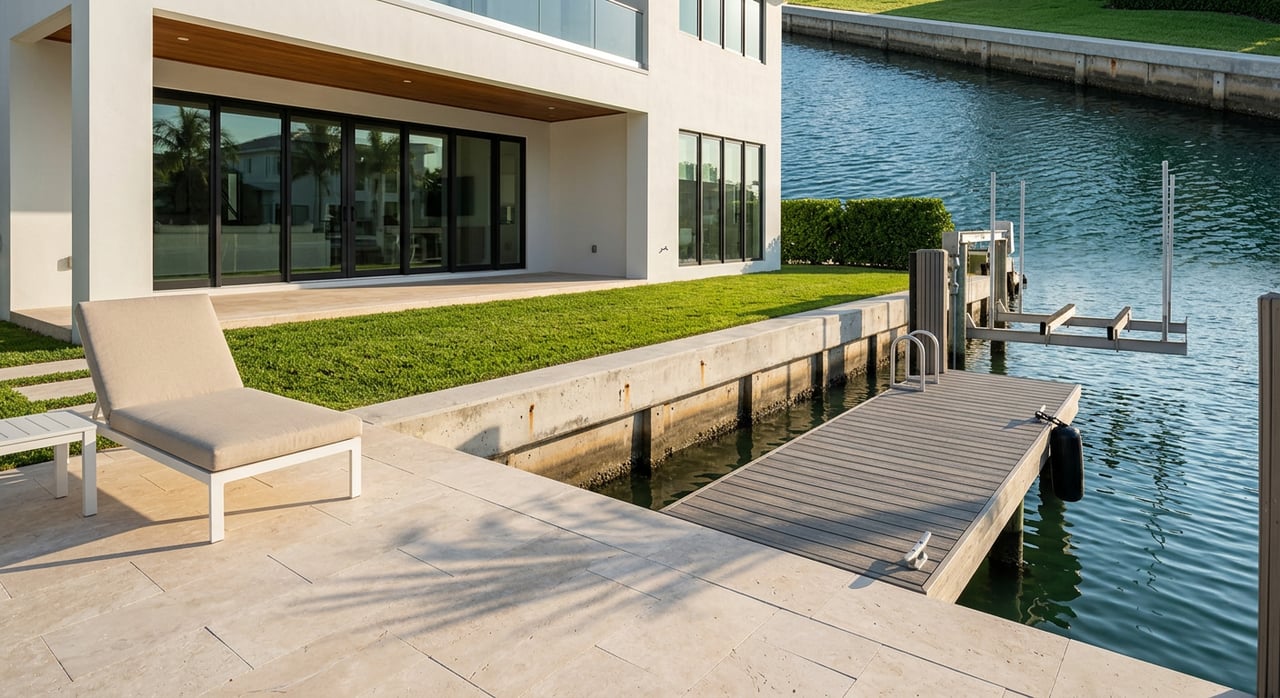
Fixed, pile-supported docks work well where water depth is adequate at low tide and the bottom conditions support pilings. They provide solid footing and handle heavier loads. Floating docks adjust to tide swings and sea level changes but require careful anchoring and access via a gangway.
Boat lifts help protect your hull and reduce marine growth. They add cost and often need structural capacity, dedicated power, and sometimes separate permits. Plan for electrical safety features like GFCI protection and schedule routine inspections to keep systems safe and reliable.
You will see options such as treated timber, tropical hardwoods, composite decking, aluminum grating, or PVC. Each has trade-offs in lifespan, appearance, and maintenance. Pilings may be timber, concrete, or steel, and marine-grade fasteners and stainless hardware resist corrosion better over time.
A dock relies on stable shoreline infrastructure. If the property has a seawall, its condition directly affects dock safety and long-term costs. Determine who is responsible for repairs or replacement and whether association assessments or shared obligations apply.
Confirm usable depth at mean low water for your vessel’s draft, and verify that the channel in front of the property offers enough width and turning room. Ask whether sedimentation requires periodic maintenance and if there is any history of spoils or shoaling after storms.
If dredging is needed to reach adequate depth, expect separate permits, higher costs, and possible work windows that limit timing. In areas with seagrass or other sensitive habitats, dredging may be restricted or conditioned with mitigation.
Request multiple bids from licensed local marine contractors and ask for itemized quotes that separate construction, permitting, electrical work, and potential dredging. Ask for references and examples of nearby projects in similar conditions. This lets you compare apples to apples and plan a realistic total budget.
Standard homeowner policies treat docks and lifts differently, and limits vary by insurer. Many owners need separate scheduling for lifts and dedicated boat insurance for the vessel. Confirm coverage for dock-related injuries and property damage, and make sure your liability limits are adequate.
Waterfront homes are likely in coastal flood zones, so check FEMA flood maps and talk through flood insurance requirements and rates. Windstorm policies often specify storm preparation steps, such as removing canopies, disconnecting power to lifts, or securing vessels, to keep coverage in force after a named storm.
Create a plan to secure or remove boats and tenders, stow accessories, and protect electrical systems. After a storm, inspect pilings, framing, connections to the seawall, and any lift equipment before normal use resumes.
Buying waterfront in North Palm Beach is about more than bedrooms and baths. You need a partner who understands vessel types, bridge clearances, HOA rules, and multi-agency permitting. With deep local experience and trusted vendor connections, you can line up inspections, clarify permits, and budget accurately so your boating life starts on day one.
Ready to evaluate a specific property, compare dock options, or build a step-by-step plan for permits and inspections? Connect with Craig Reeves for thoughtful guidance and a tailored strategy that fits your goals.
Reach out to Craig Reeves to get started today.
Stay up to date on the latest real estate trends.
Get assistance in determining current property value, crafting a competitive offer, writing and negotiating a contract, and much more. Contact us today.